Same plant, different drink
Matcha and green tea both come from the tea plant, so it is easy to assume they are more or less the same thing. In the cup, they could hardly be more different.
With green tea, you steep leaves in hot water and then remove them. With matcha, the leaves are ground into a fine powder that you whisk into water and drink whole. That single difference changes the strength, the texture, the colour and the whole ritual of making it.
How matcha is grown and made
Ceremonial matcha starts with shade-grown tea. The plants are covered before harvest, which encourages a deeper green colour and a softer, rounder flavour in the leaves.
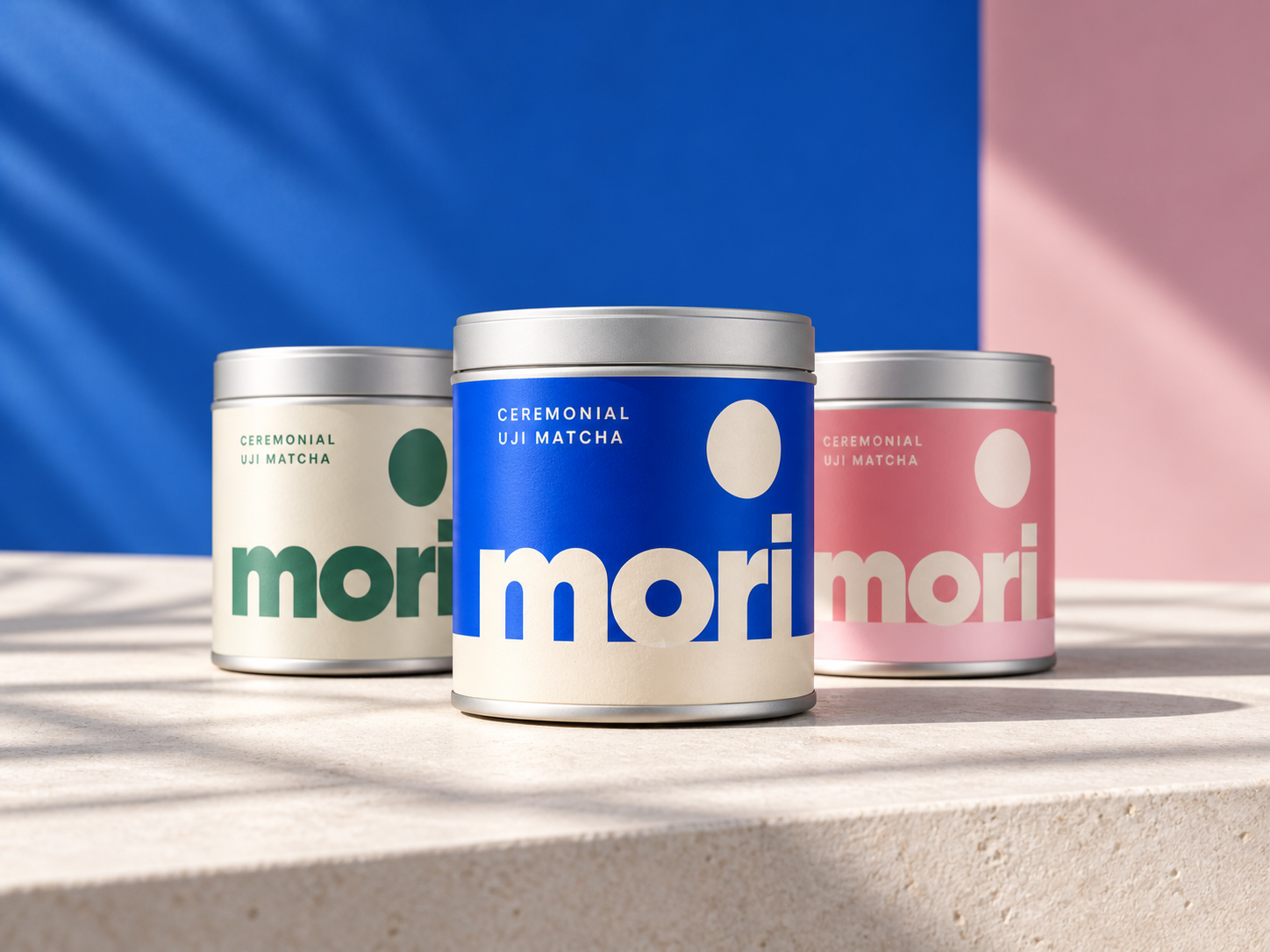
After picking, the leaves are steamed, dried and stripped of stems and veins, then finely milled into powder. The result is concentrated and vivid, which is why a small amount goes a long way. Mori Matcha is made this way, from shade-grown leaves on a family farm in Uji, finely milled in Japan.
Preparation is different
Green tea is infused. Matcha is suspended. Because the powder does not dissolve, it needs to be whisked or shaken into the water, and it will clump if you treat it like a tea bag.
The method is simple once you know it: sift 1–2g (about ½–1 teaspoon) into a bowl, add a splash of warm, not boiling, water and whisk until smooth and lightly foamy. Then top up with more water or your milk of choice. A bamboo matcha whisk gives the silkiest texture, though a handheld frother works for lattes.
Flavour and texture
Steeped green tea is usually light, clear and delicate. Depending on the style it can be grassy, floral or toasty, but it stays quite transparent in the cup.
Matcha is fuller in every way. Good matcha is vivid, velvety and rounded, with a gentle sweetness and an umami finish. That body is why matcha works so well with milk, and why matcha lattes have become a café staple.
What is in the cup
Both drinks naturally contain caffeine, L-theanine and green-tea polyphenols. The difference is that with matcha you consume the whole powdered leaf rather than just what the water draws out, so a serving of matcha is usually stronger than a standard cup of green tea.
If you are sensitive to caffeine, that is worth knowing. Start with a smaller serving and see how it suits you. There is more detail in how much caffeine is in matcha.
Which should you choose?
Choose green tea when you want something light and simple to sip through the day. Choose matcha when you want a fuller drink, a two-minute ritual and the flexibility of hot, iced or latte-style serves.
They do not need to compete. Plenty of tea drinkers keep both, and if you enjoy deeper, toasty flavours, roasted green teas such as Hōjicha are another style worth exploring alongside matcha.
Good to know
Frequently asked questions
Is matcha just powdered green tea?
Matcha is a specific kind of powdered green tea, made from shade-grown leaves that are finely milled. Not every green tea powder is ceremonial matcha.
Is matcha stronger than green tea?
Usually, yes. You drink the whole powdered leaf rather than an infusion, so a serving is more concentrated.
Can I make matcha like a tea bag?
No. Matcha needs to be whisked or shaken into a small amount of warm water first, otherwise it will clump.
Do both contain caffeine?
Yes. Matcha and green tea both naturally contain caffeine and L-theanine, with matcha typically being the stronger of the two per serving.