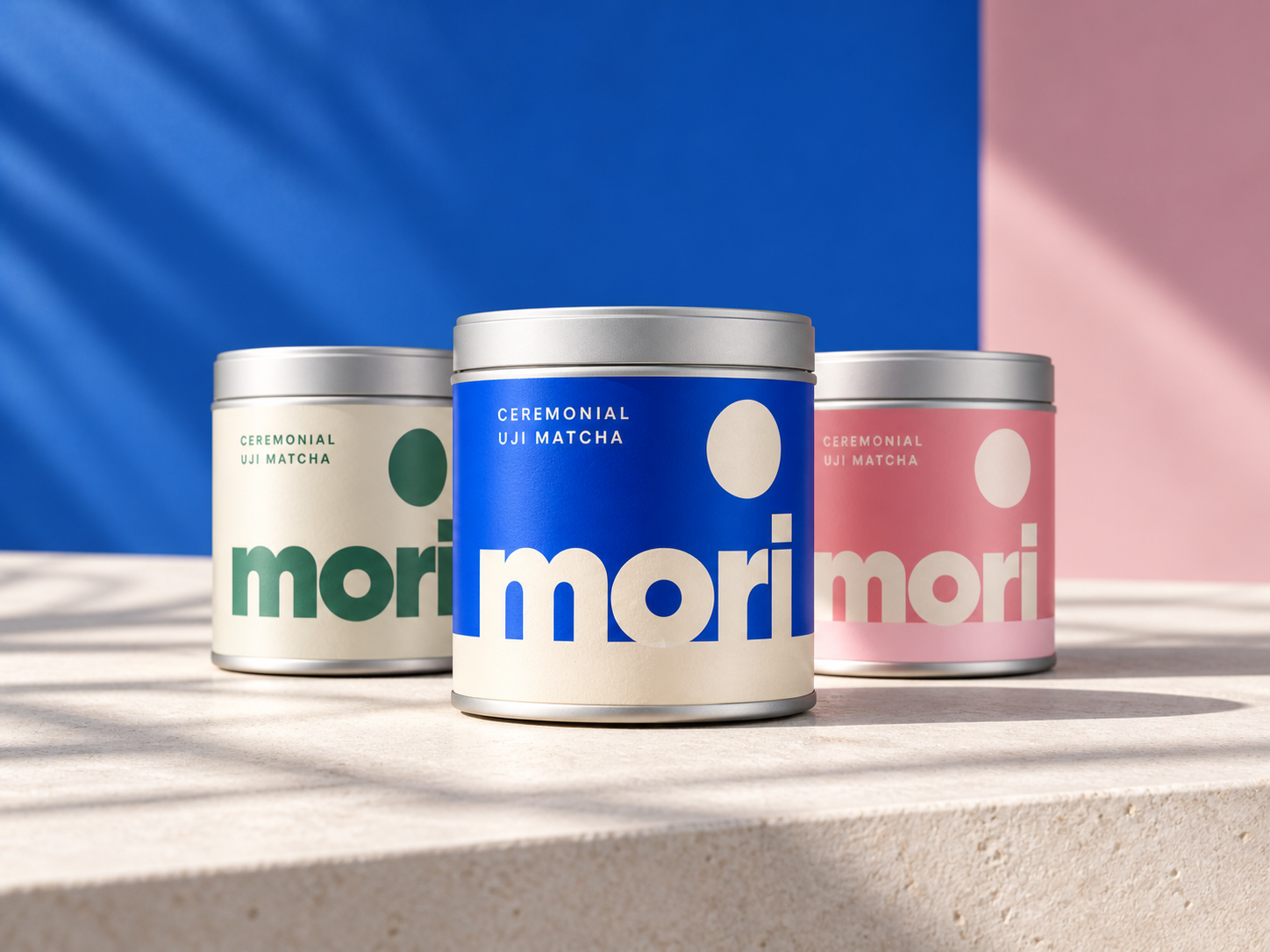
What you need
A great matcha latte needs very little. The quality of the matcha does most of the work, so start there and keep everything else simple.
- 1–2g of ceremonial-grade matcha, about ½–1 teaspoon
- A small splash of warm, not boiling, water
- 180–220ml of milk of your choice
- A bamboo whisk or handheld frother
- A small sieve, a bowl or wide mug, and your favourite glass
Oat milk is popular because its natural sweetness and body round off matcha without hiding it, but dairy, almond and coconut milk all work. We cover the oat milk pairing in more detail in matcha with oat milk.
The method
Sift the matcha into a bowl or mug. Matcha is an exceptionally fine powder that naturally clumps as it settles, and sifting is the simplest way to guarantee a smooth drink.
Add a small splash of warm water, roughly two to three tablespoons. Whisk briskly in a W or M shape rather than stirring in circles, until the powder is fully suspended and the surface looks lightly foamy. This is your matcha concentrate.
Warm or froth your milk separately, then pour it over the concentrate. For an iced latte, pour cold milk over ice and add the concentrate last for that layered, café-style look.
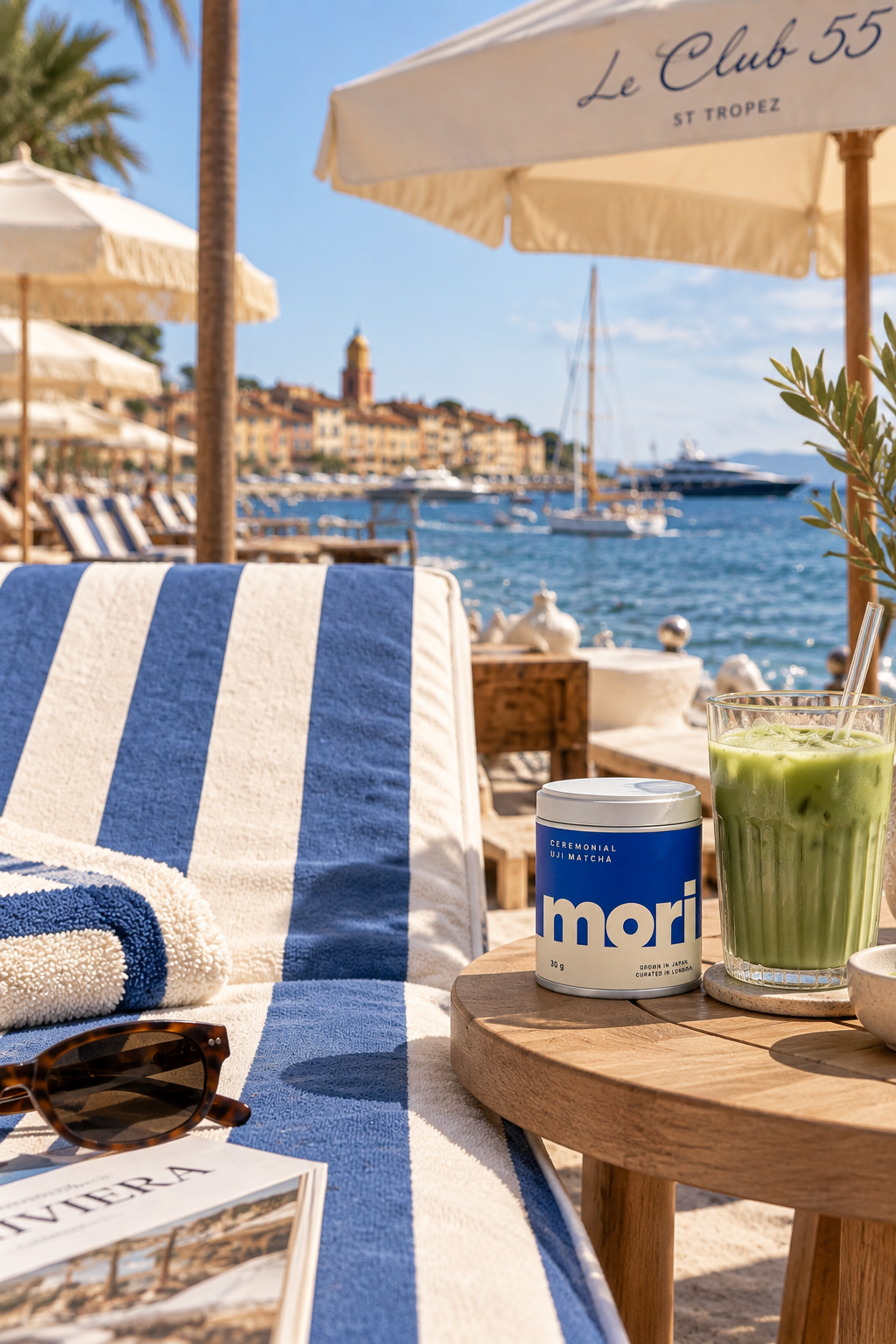
Why the water comes first
It is tempting to tip the powder straight into a glass of milk. Resist it. Matcha does not dissolve; it suspends. Milk is too thick to break up the powder evenly, so you end up with dry pockets and a chalky finish.
Whisking with a little warm water first creates a smooth, even base that blends into milk in seconds. It is the single change that makes a homemade latte taste like it came from a good café.
Common mistakes
Most disappointing matcha lattes come down to a handful of fixable issues.
- Boiling water, which can make matcha taste harsh and bitter
- Skipping the sieve, which leaves clumps that never quite whisk out
- Too much milk for the amount of matcha, which makes the drink taste flat
- Low-grade powder, which stays bitter however well you make it
If your latte tastes weak, reduce the milk before adding more powder. If it tastes too strong, keep the same method and use slightly less matcha. Our guide to the best water temperature for matcha explains why warm water matters so much.
How to make it feel café-level
The difference is almost always texture. Sift properly, whisk until you see a fine foam, and use milk with enough body to carry the matcha. A bamboo matcha whisk gives a noticeably silkier concentrate than a spoon.
Good matcha should not need much sweetness, but if you like it, stir a little honey, maple syrup or vanilla into the milk before pouring. A tiny pinch of salt can also soften any bitterness without making the drink taste salty.
Hot or iced, sweet or clean
The same concentrate works for every version of the drink, so it is easy to adjust with the seasons. In colder months, froth warm milk until it is glossy and pour it slowly over the matcha for a soft, creamy cup. In summer, build it over plenty of ice and keep the concentrate slightly stronger, as melting ice will dilute it.
For a cleaner, more matcha-forward drink, use less milk and skip the sweetener. For something more indulgent, add vanilla or a little maple syrup. Once you know the base method, every variation is just a small tweak.
Making it a habit
Once the method is familiar, a matcha latte takes about two minutes. Keep your tin, sieve and whisk together so the ritual is easy to repeat each morning.
For lattes away from home, Single-Serve Matcha gives you individually sealed servings that are easy to shake up with milk at your desk or on the go.
Good to know
Frequently asked questions
Can I make a matcha latte without a whisk?
Yes. A handheld frother, shaker bottle or small blender can work. Sifting still helps.
Should matcha go in water or milk first?
Mix it with a small amount of warm water first. That creates a smooth concentrate before you add milk.
How much matcha should I use in a latte?
Start with 1–2g, about ½–1 teaspoon, for 180–220ml of milk, then adjust to taste.
Can I use the same method for an iced latte?
Yes. Make the concentrate with warm water, then pour it over cold milk and ice. See how to make an iced matcha latte.