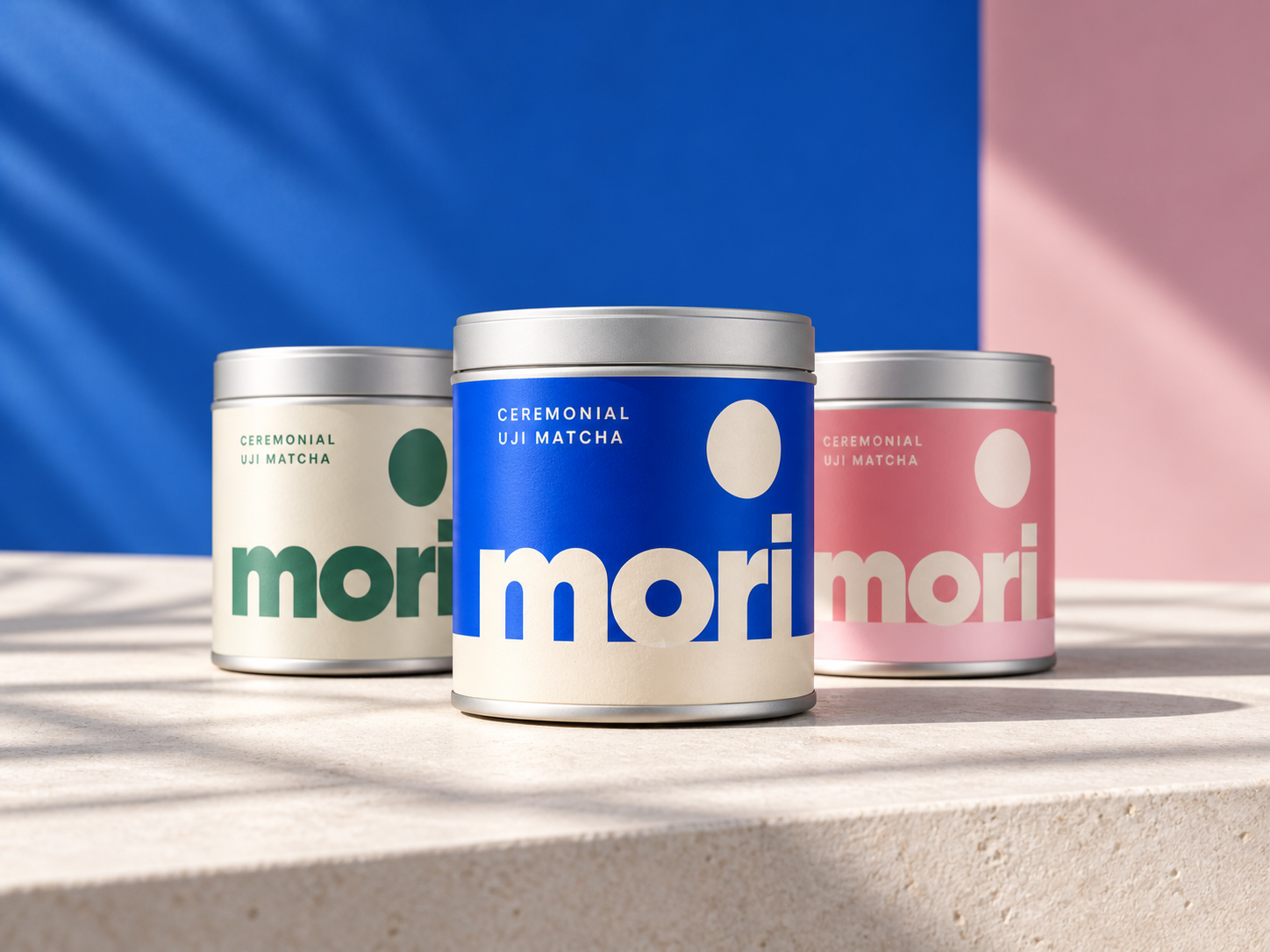
Open the tin and look first
Before you taste matcha, you can learn a lot just by lifting the lid. Colour is one of the quickest and most honest signals of quality, because it reflects how the tea was grown, how it was processed and how well it has been stored since.
Good matcha is vivid. Not neon, not artificially bright, but a lively, fresh green that looks almost alive in the light. When you whisk it, that colour carries through into the bowl or glass.
Why good matcha is so green
Ceremonial matcha is made from shade-grown tea leaves. In the weeks before harvest the plants are covered, which slows their growth and encourages the leaves to develop a deeper green colour and a softer, rounder flavour.
After harvest, the leaves are steamed, dried and finely milled. Each step affects the final powder. Careful handling keeps the colour bright; rushed or rough processing tends to dull it. That is why a vivid powder is usually a sign that someone has paid attention all the way from field to tin.
Mori Matcha comes from a family farm in Uji, Japan’s most celebrated tea region, where shade-grown leaves are finely milled into the bright, velvety powder you see when you open the tin.
What dull powder can mean
Olive, yellowish or brownish matcha is a warning sign. It often points to one of three things: lower grade leaves, older stock, or powder that has been exposed to air, light, heat or moisture for too long.
Dull matcha usually tastes the way it looks. Expect a flatter, more bitter or dusty cup, with less of the fresh, grassy sweetness that makes good matcha worth drinking. If your matcha has always tasted harsh, the colour of the powder is a good place to start investigating, alongside the other common causes of bitterness.
Texture matters too
Colour gets the attention, but texture is just as telling. Rub a little powder between your fingers: good matcha should feel silky and fine, almost like eyeshadow. Coarse or gritty powder is harder to whisk and can leave sediment in the cup.
Fine powder naturally clumps together in the tin, so clumps on their own are not a sign of poor quality. Sifting before you whisk breaks them up and gives you a smoother drink every time.
Colour changes over time
Even great matcha will not stay bright forever once opened. Air, light, warmth and humidity gradually dull the colour and soften the aroma. Keeping the lid sealed and the tin somewhere cool and dry makes a real difference, and we cover the details in how to store matcha so it stays fresh.
This is also why we suggest treating matcha as something to drink regularly rather than save for special occasions. A tin that is opened and enjoyed through the month will look and taste better than one left at the back of the cupboard.
Use taste as the final test
Colour is a strong clue, not a guarantee. The best test is simple: sift about ½–1 teaspoon into a bowl, add a splash of warm (not boiling) water and whisk until smooth and lightly foamy. Then taste it before adding milk.
Good matcha should be smooth, fresh and gently sweet, with an earthy, rounded finish rather than a sharp bitter edge. Milk can make most powders drinkable, but water shows you what you are really working with.
Good to know
Frequently asked questions
Is all bright green matcha good?
Not automatically, but bright green is one of the most useful positive signs. Judge it alongside aroma, texture and how it tastes with water.
Why is my matcha more yellow than it used to be?
Matcha dulls when it is exposed to air, light, warmth or moisture. Keep the lid sealed and store the tin somewhere cool and dry.
Does culinary matcha look different to ceremonial matcha?
Usually, yes. Culinary matcha is often duller and more olive in colour, while ceremonial matcha is typically brighter and finer.
How do I check matcha quality at home?
Look at the colour, feel the texture, then whisk a small serving with warm water and taste it without milk or sugar.