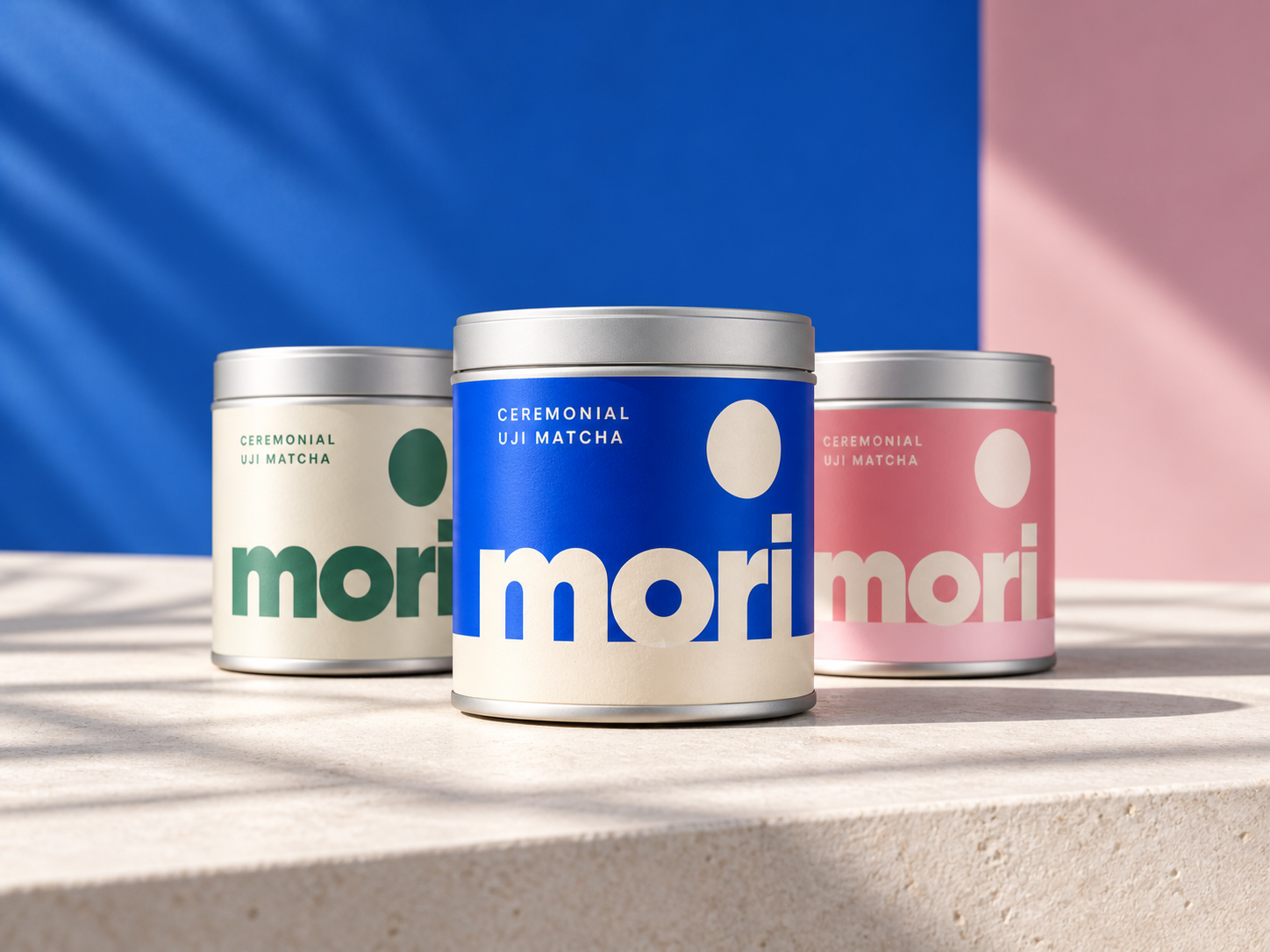
The meaning of ceremonial grade
Ceremonial-grade matcha is matcha intended to be drunk, not hidden in baking. It is typically made from younger, shade-grown tea leaves that are carefully processed and stone-fine milled into a vivid, velvety powder with a smoother, more rounded taste.
There is no single global legal standard for the term, which means the label alone does not guarantee quality. It is still worth judging the powder itself. Colour, aroma, texture and taste tell you far more than the words on the packet.
How it is made
Matcha starts in the field. In the weeks before harvest, tea plants are shaded from direct sunlight. This slows growth and changes the character of the leaves, which is part of why good matcha has its vivid colour and rounded, umami flavour.
After harvest, the leaves are steamed, dried and sorted, with stems and veins removed. What remains is milled into an exceptionally fine powder. Every step, from shading to milling, shapes what ends up in your cup.
Mori Matcha comes from a family farm in Uji, Japan's most celebrated tea region. The leaves are shade-grown, carefully harvested and finely milled in Japan, and nothing is added: no sugar, sweeteners, flavours or fillers.

Ceremonial vs culinary matcha
Culinary matcha is designed for recipes where other ingredients carry the flavour. It is useful for cakes, smoothies and desserts, and it is usually more economical. On its own with water, though, it often tastes noticeably bitter or flat.
Ceremonial matcha should taste good as usucha, a thin matcha whisked simply with water. That is the real test. If a powder only tastes acceptable under plenty of milk and sugar, it probably is not the right grade for drinking.
- Ceremonial: vivid green, fine and silky, smooth and gently sweet, made for drinking
- Culinary: duller green, often coarser, more astringent, made for cooking and baking
How to spot quality
Look for a vivid green colour, a fine, soft texture and a fresh, grassy aroma when you open the tin. Olive, yellowish or brownish powder often points to older leaves, lower-grade material or poor storage.
Taste is the final test. Good matcha is vegetal and savoury, with a clean finish, but it should never be aggressively bitter or dusty. We go deeper into this in what matcha colour says about quality.
When it matters
If you drink matcha with water, ceremonial grade matters a lot. If you only bake with it, culinary grade may be enough. For lattes, ceremonial grade still makes a visible difference: the drink looks brighter, tastes cleaner and needs less sweetening to be enjoyable.
Mori is built around ceremonial-grade matcha because daily drinking is the point. Whether you whisk it at home or carry Single-Serve Matcha for busy days, it is the same Uji matcha in every serving.
Why origin matters
Uji, just outside Kyoto, has a long history of tea growing and is one of the most celebrated regions for matcha in Japan. Climate, soil and generations of growing knowledge all shape the leaf, and those details show up in colour, aroma and taste.
Knowing where your matcha comes from is one of the simplest ways to judge whether a ceremonial label is backed by substance. A clear origin, a vivid powder and a clean, gently sweet taste are good signs you are drinking the real thing.
How to enjoy it
Sift 1–2g into a bowl, add a splash of warm, not boiling, water and whisk until smooth and lightly foamy. Top with more water for a clean, traditional cup, or with milk for a latte. A bamboo matcha whisk brings out the best texture.
If you have only ever tried supermarket powders, the difference can be striking. Our comparison of supermarket and ceremonial matcha explains why.
Good to know
Frequently asked questions
Is ceremonial grade always better?
It is better for drinking, but not always necessary for baking. Use the grade that matches how you plan to use it.
Why is ceremonial-grade matcha more expensive?
It generally uses more selective leaves, shade-growing, careful processing and fine milling, all of which affect cost.
Can I use ceremonial matcha in lattes?
Yes. It makes a brighter, cleaner-tasting latte that needs less sweetening.
Is Mori ceremonial grade?
Yes. Mori Matcha is 100% ceremonial-grade Japanese matcha from a family farm in Uji, with nothing added.