Not all green powder is made for drinking
Walk down the tea aisle and you will find matcha at wildly different prices, often sitting side by side with little explanation. Many supermarket powders are made with recipes in mind: smoothies, baking, lattes with plenty of sugar. Ceremonial grade matcha is made to be whisked with water and drunk as it is.
That difference in intention shapes everything that follows, from the leaves that are chosen to how finely they are milled. It is also why two tins that both say matcha on the front can taste like completely different products.
The water test
The simplest way to understand the gap is to taste both with nothing else in the cup. Sift a small serving, add a splash of warm water, whisk and sip. Milk and sweetener are good at hiding flaws, so water is where the truth comes out.
Lower grade matcha often tastes flat, dusty or sharply bitter. Good ceremonial matcha should taste fresh, vegetal and rounded, with a gentle umami depth and a clean finish. If your first experience of matcha was a supermarket powder, it may not have been the version people actually fall for. Our guide to why matcha tastes bitter covers the other usual suspects.
What you can see before you taste
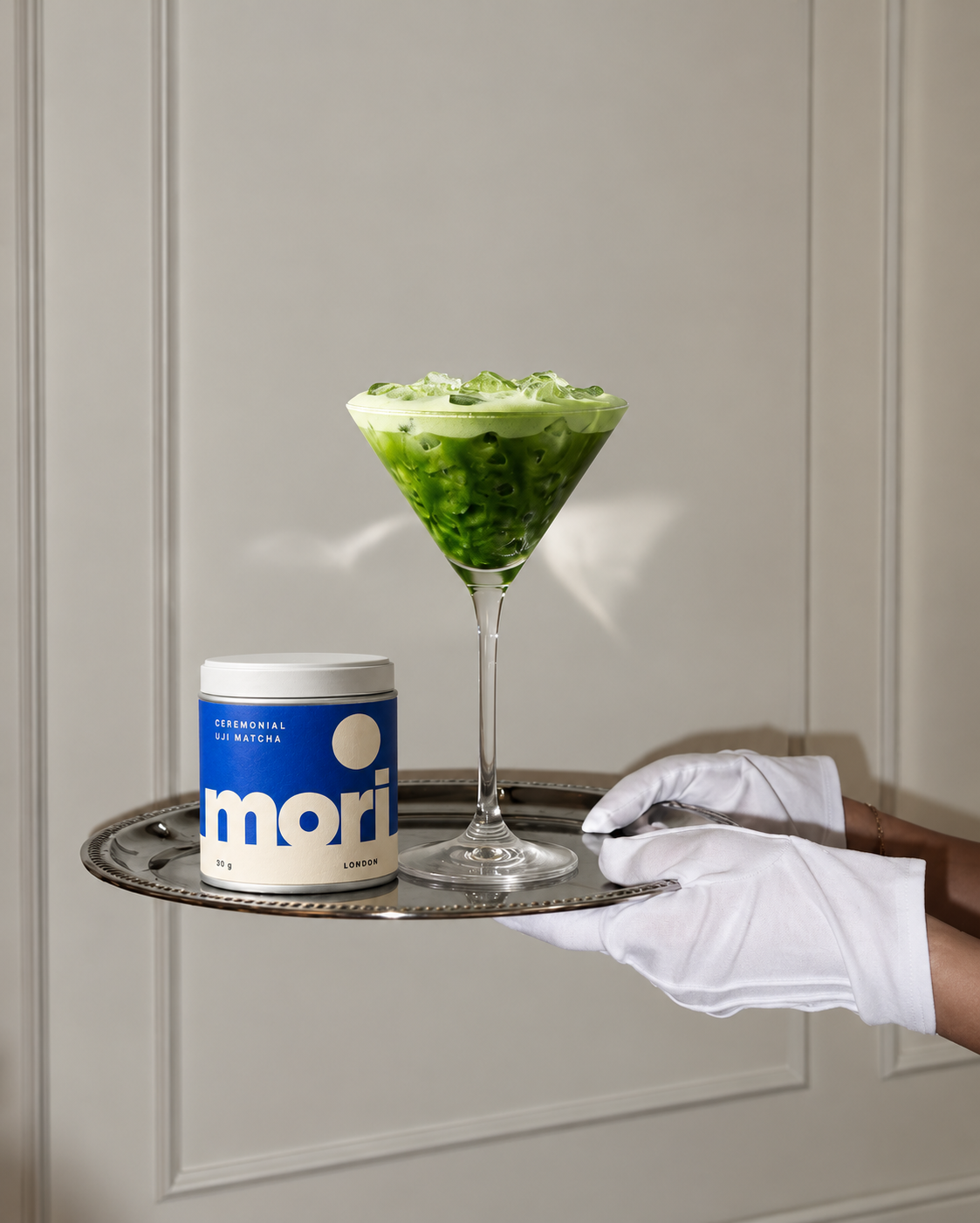
Colour is the quickest clue. Ceremonial matcha is usually a vivid, bright green. Powders that look olive, yellowish or brownish tend to come from older leaves or have lost freshness somewhere along the way. Texture matters too: good matcha feels silky between your fingers, not coarse or gritty.
Aroma is the third signal. Open a fresh tin of good matcha and it should smell sweet, grassy and alive. A faint or stale smell usually shows up in the cup.
- Bright green colour rather than dull olive
- Fine, silky texture that whisks easily
- Fresh, sweet, grassy aroma
- Smooth taste with water alone
Read the label, not just the front
Look for a single ingredient. Some products blend matcha with sugar, milk powder or flavourings, which changes both taste and value. Origin is worth checking as well. Japanese matcha has a long tradition of shade-growing and fine milling, and regions like Uji are known for it.
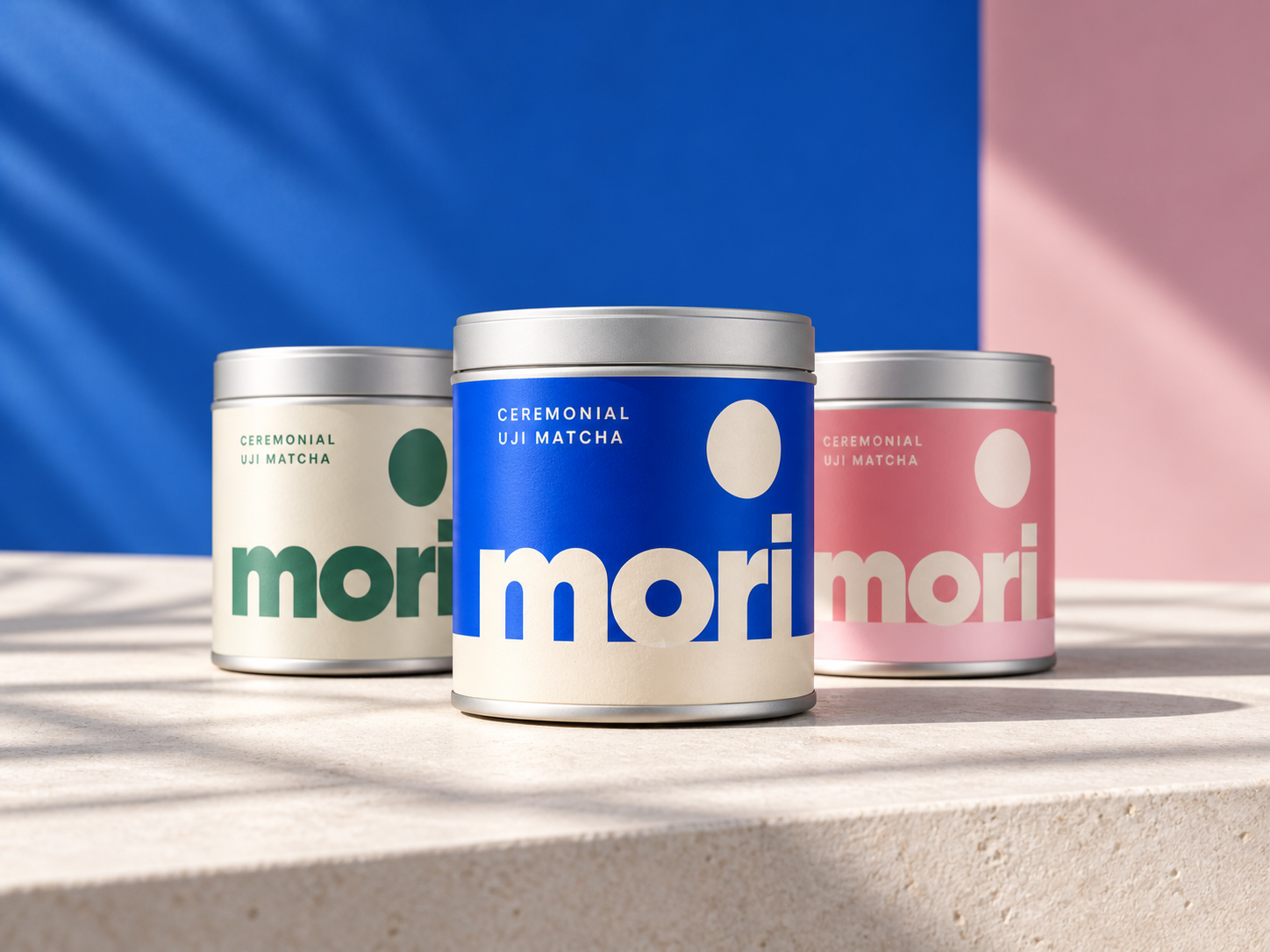
Mori Matcha keeps it simple: one ingredient, no sugar, sweeteners, flavours or fillers.
When it is worth spending more
Spend more when the matcha is the main event. If you drink it with water, make hot or iced lattes, or have it as a daily ritual, quality makes a real difference. Bitterness does not disappear under milk; it just gets covered, and you end up adding sugar to compensate.
Save culinary grade for baking or recipes where matcha is one ingredient among many. There is no need to put your best tin into a cake.
Thinking about value
A cheaper powder is not good value if you do not enjoy drinking it. A good tin used every day, prepared properly, often works out as the better buy because none of it gets abandoned at the back of the cupboard. A 30g tin of Mori gives you approximately 30 servings, and the full range includes options for home, travel and gifting.
Why grade changes the flavour
The leaves used for drinking matcha are typically younger and more tender. Shade-growing in the weeks before harvest encourages a deeper green colour and a softer, more rounded flavour, which is a big part of why ceremonial matcha tastes smooth rather than harsh.
Later-harvest leaves tend to be tougher and more astringent. They still have their uses, particularly in recipes, but that character comes through clearly when you drink them with water. Milling matters as well: finer powder suspends more evenly, feels silkier and whisks up into a smoother cup.
Freshness is part of quality
Even a good powder loses its brightness if it sits under shop lights or in a half-open packet for months. Matcha does not enjoy air, light, heat or moisture, and it shows in the colour and flavour when it has been stored poorly.
Whatever you buy, keep it sealed, somewhere cool and dry, and aim to use it regularly rather than saving it for special occasions. Our guide to storing matcha covers the details.
A simple side-by-side
If you already have a supermarket powder at home, try a quick comparison. Make two small cups with the same serving, the same warm water and the same whisking. Look at the colour, smell each one, then taste them one after the other. It is the fastest way to learn what you personally value in a matcha.
Good to know
Frequently asked questions
Is supermarket matcha bad?
Not always. It depends on the product and how you use it, but it is often less suited to drinking with water alone.
Why does ceremonial matcha cost more?
It usually reflects more selective leaves, careful shade-growing and fine milling, all of which make it better suited to drinking.
Can I use ceremonial matcha for baking?
You can, but most of its subtlety is lost in recipes. Culinary grade is usually the more sensible choice for baking.
How can I tell if my matcha is good quality?
Check for a bright green colour, a silky texture and a fresh aroma, then taste it with warm water. Our guide to matcha colour and quality goes deeper.