Why oat milk suits matcha
Oat milk has body and a natural, gentle sweetness, so it rounds off matcha without covering it completely. That balance makes it one of the easiest milks for both hot and iced matcha lattes.
Its mild cereal flavour also works with matcha's grassy, umami notes rather than fighting them. Where some milks can make matcha taste thin or chalky, oat milk tends to give a smooth, rounded cup.
Start with a matcha concentrate
Do not stir matcha powder directly into a full glass of oat milk. It will clump, and the dry pockets taste bitter. Instead, sift 1–2g of matcha, about ½–1 teaspoon, into a cup and whisk it into a small splash of warm, not boiling, water.
Once the concentrate is smooth and lightly foamy, pour in your oat milk. For a hot latte, warm or froth the milk first. For iced drinks, add the concentrate to a glass of ice and top with cold oat milk.
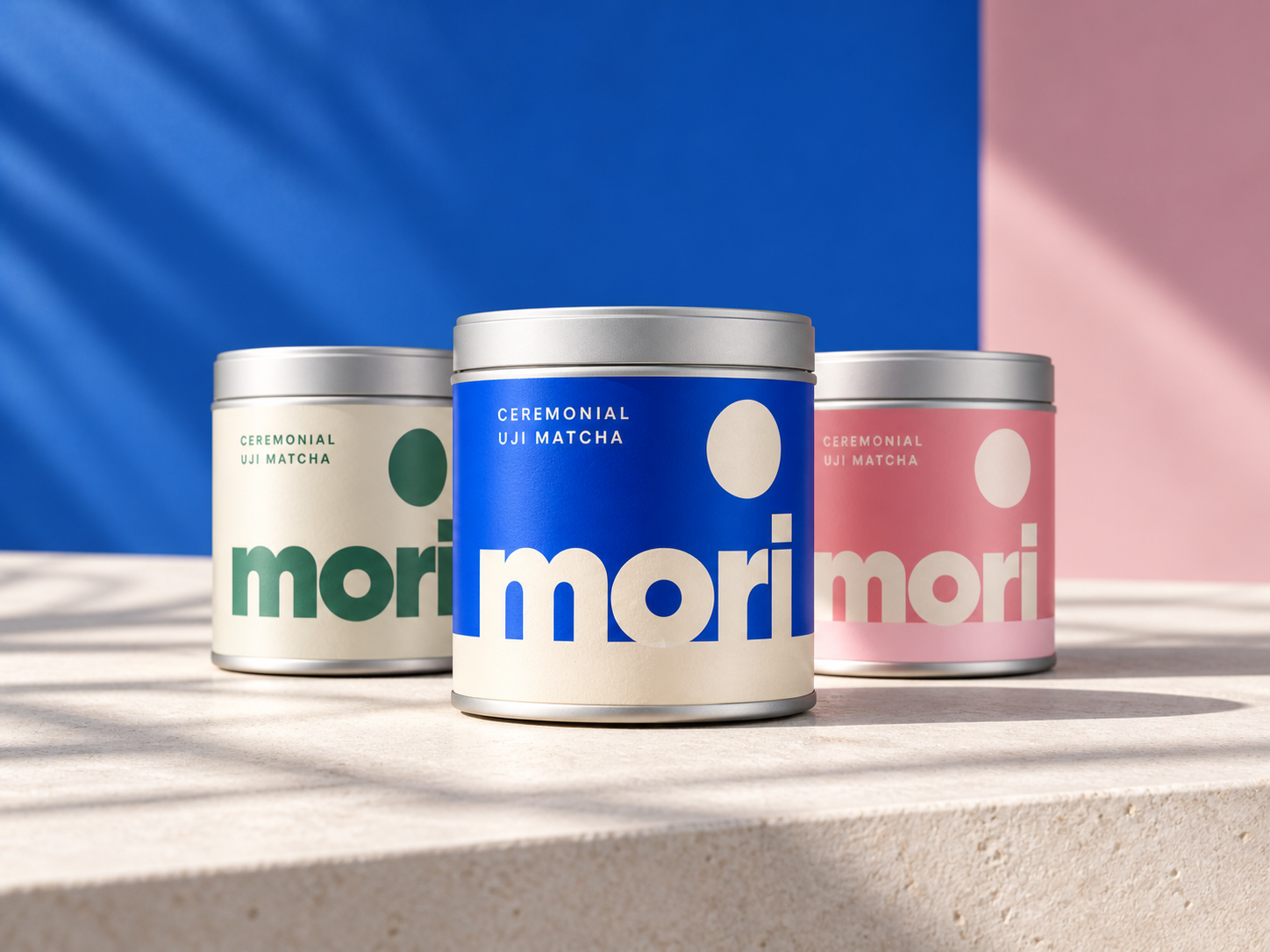
The concentrate step is where good matcha earns its place. Mori Matcha is finely milled from shade-grown Uji leaves, so it whisks into a vivid, velvety base that holds its flavour under milk.
Barista oat milk vs regular oat milk
Barista oat milk usually foams better and gives a thicker, cafe-style texture, which suits a hot latte. Regular oat milk is lighter and can taste cleaner if you prefer less richness or want the matcha to come through more clearly.
Neither is wrong. Try both and choose based on the drink you enjoy: a creamy, foamy latte or a simpler, fresher everyday cup.
Getting the balance right
If your latte tastes weak, reduce the milk before adding more powder. Too much matcha can turn chalky. If it tastes too strong, keep the method the same and use slightly less powder.
A good starting ratio is a smooth concentrate topped with around 180–220ml of oat milk. From there, adjust in small steps until it tastes right to you.
Sweetness and flavour
Good matcha should not need much sugar, especially with naturally sweet oat milk. If you want a little extra, start small with maple, honey or vanilla, and add it to the milk so it mixes evenly.
A tiny pinch of salt can also make an oat matcha latte taste more balanced, particularly when served iced.
Take it with you
If you make oat matcha away from home, Single-Serve Matcha packs individually sealed servings of Mori ceremonial Uji matcha that slip into a bag or desk drawer. Shake one with a splash of water, then pour over oat milk and ice. For the full at-home method, see our guide to making a matcha latte.
Hot or iced, the method is the same
The good news is that one technique covers both. Make a smooth concentrate, then decide on temperature. For a warm latte, heat the oat milk gently rather than boiling it, which can make it taste slightly cooked. For an iced latte, keep everything cold and let the ice do the rest.
If your oat milk separates when heated, a barista version usually holds together better. Pour the milk in slowly and give the cup a gentle swirl to bring everything together.
Good to know
Frequently asked questions
Is oat milk the best milk for matcha?
It is one of the most popular options because it is creamy and lightly sweet, but personal taste matters. Dairy, almond and coconut milk all work too.
Can I make matcha with unsweetened oat milk?
Yes. Unsweetened oat milk gives a cleaner drink and lets the matcha flavour come through.
Why does my oat matcha latte have clumps?
The powder was probably added straight to the milk. Sift it and whisk it into a small splash of warm water first.
Can I make an iced oat matcha latte?
Yes. Pour a smooth matcha concentrate over ice and cold oat milk, then stir.