The tool matcha was made for
A bamboo matcha whisk, known as a chasen, is the traditional tool for preparing matcha. Its fine tines move quickly through the liquid, breaking up the powder and creating a smooth texture with a light layer of foam.
That texture is not just about looks. Matcha is a powder suspended in water rather than dissolved, so how well it is whisked affects how smooth and rounded it tastes.
Why a spoon struggles
Stirring matcha with a spoon usually leaves clumps and a gritty layer at the bottom of the cup. Fine powder clings together, and a spoon simply pushes those clumps around rather than breaking them apart.
Sifting helps a lot, but even sifted matcha benefits from something that can move fast enough to suspend every particle evenly.

How to whisk properly
Sift 1–2g of matcha into a bowl or wide cup. Add a small splash of warm, not boiling, water. Hold the bowl steady and whisk briskly in a W or M shape, moving from the wrist rather than stirring in circles.
After 15–20 seconds you should see a smooth surface with fine, lightly foamy bubbles. Then top with more water or pour over milk. If you see lumps, the water may have been added too fast or the powder was not sifted.
- Sift first to break up clumps
- Start with only a splash of water
- Whisk in a quick zigzag, not circles
- Stop once the surface is smooth and lightly foamy
Caring for your whisk
Rinse your whisk in warm water straight after use and let it dry standing upright or on a whisk holder, so the tines keep their shape. Avoid soap and dishwashers, which can dry out bamboo.
Before whisking, some people soak the tines in warm water for a moment. It softens the bamboo slightly and helps it glide through the matcha.
Good alternatives
If you do not have a whisk yet, a handheld frother is the easiest modern alternative. It is fast, compact and works well for lattes. A small shaker or jar can work for iced matcha, although sifting first still makes a big difference.
These are useful shortcuts, but they do not quite replicate the texture of a bamboo whisk. If matcha becomes part of your daily routine, a proper whisk is worth having.
Start with good matcha
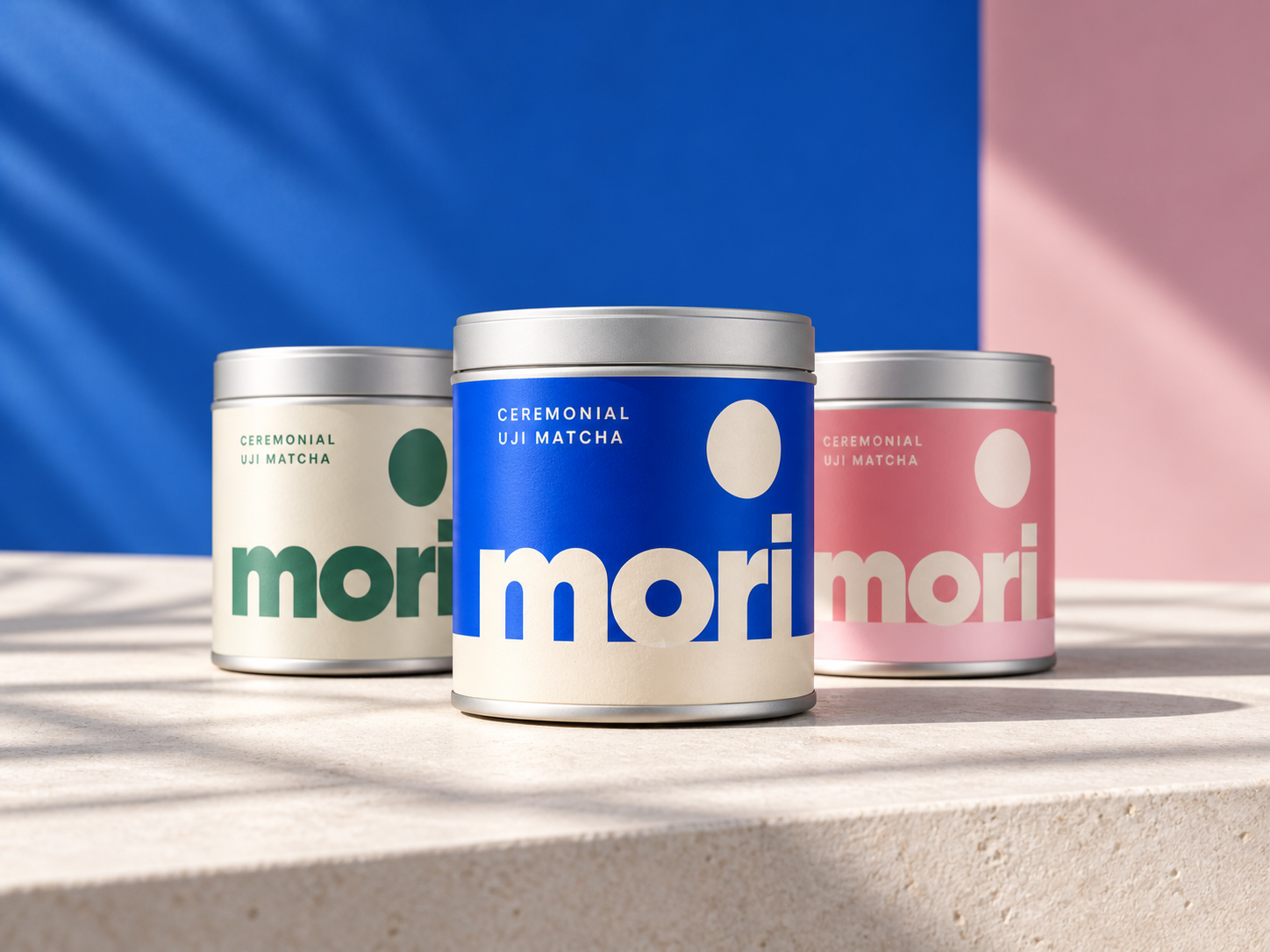
No tool can rescue stale or bitter powder. Mori Matcha is 100% ceremonial-grade Japanese matcha from a family farm in Uji, finely milled so it whisks up smooth. Pair it with the Matcha Whisk and you have everything you need. For the full method, see our guide to making a matcha latte at home.
Choosing a bowl
A wide bowl gives the whisk room to move, which makes it far easier to create an even foam. A narrow mug works in a pinch, but the whisk tends to bump the sides and splash. If you do not have a matcha bowl, any wide cereal or soup bowl with a rounded base will do the job while you get started.
Warm the bowl with a little hot water first, then tip it out and dry it. A warm bowl keeps the matcha at a comfortable drinking temperature for longer.
Troubleshooting texture
If your matcha is lumpy, sift it first and add the water gradually. If there is no foam, whisk faster with a lighter touch, keeping the tines just below the surface rather than scraping the bottom of the bowl. If the bubbles are large and uneven, finish with a few slower passes across the surface to refine them.
Water temperature affects texture too. Water that is too hot can make the drink taste harsh, while cold water makes it harder to suspend the powder. Our guide to the best water temperature covers the sweet spot.
Whisking for lattes and iced drinks
For a latte, whisk your matcha into a smooth concentrate with a splash of warm water, then pour it over warm or frothed milk. For iced drinks, make the same concentrate and pour it over ice and cold milk. The whisk does its most important work in that first small amount of water, so there is no need to whisk the whole glass.
Good to know
Frequently asked questions
Can I stir matcha with a spoon?
You can, but it is much more likely to clump. A whisk, frother or shaker gives a far smoother result.
Is a bamboo whisk better than a frother?
For traditional matcha with water, yes. For quick lattes, a frother is a practical alternative.
How do I clean a matcha whisk?
Rinse it in warm water after each use, skip the soap and let it dry upright so the tines keep their shape.
Do I need to sift matcha if I use a whisk?
It helps. Sifting breaks up clumps before whisking, which makes it easier to get a smooth, even texture.